
What Probate Covers in Oceana County
Probate is the court process that settles what happens to a person's estate, property, and personal decisions when a will, a death, or a legal incapacity brings the matter before a judge. In Oceana County the work covers decedent estates, admission of wills, appointment of personal representatives, administration of estates, guardianships, conservatorships, name changes, and the involuntary mental-illness treatment process. Each of those matters produces a court file that may be open to the public or held back depending on the subject.
The Oceana County Probate Court is its own trial court, not a department of the County Clerk. It sits inside the state judicial system alongside the county's circuit and district courts, with a single judge and a probate register who manage filings. The county's official Probate Court page lists the judge, register, forms, fee schedule, and payment link that estate and guardianship filers rely on.
That page also connects to the state SCAO probate forms and the Michigan Probate Court Fee Schedule, the two resources filers reach for most when opening a case. Probate cases stay local, so the file is built and stored in Hart rather than at a central state office.
The Oceana County Probate Court
All Oceana County probate filings go to a single court in the county building at Hart. Hon. Eric R. Fox serves as Probate Judge, and Lucy Lund is the Probate Register who oversees the office and case records. People who need an accommodation under the Americans with Disabilities Act can reach Lucy Lund at (231) 873-3666 or Tonya Selig at (231) 873-3977, and interpreter requests run through the courts' Language Access Plan.
The office is the place to confirm hours, drop off forms, pay filing fees, or ask how to view a file that does not appear online. Staff can give forms and general filing information, but Michigan law bars court clerks from giving legal advice or preparing legal documents.
Oceana County Probate Court
100 S. State Street
Hart, MI 49420
(231) 873-3666
Monday to Friday, 9:00 a.m. to 5:00 p.m.
Probate Terms Defined
Probate paperwork leans on a handful of words that carry very specific legal meanings. Reading an estate or guardianship file gets much easier once those roles are clear, because each term points to who acts, who is protected, and what the court decides. The short glossary below covers the labels that show up most in Oceana County probate records.
- Testator
- The person who made a valid will directing how their property should pass after death.
- Executor / Personal Representative
- The person the court appoints to administer a decedent estate, gather assets, pay claims, and distribute what remains.
- Intestate
- Dying without a valid will, so state law decides how the estate is divided among heirs.
- Guardian
- A person appointed to make personal and care decisions for a minor or an incapacitated adult.
- Conservator
- A person appointed to manage the financial affairs and property of a protected individual.
- Ward
- The minor or protected person for whom a guardian or conservator is appointed.
How Probate Works in Oceana County
Opening an estate follows a defined path. A person opening a decedent estate must complete an Application or Petition for appointment of a personal representative and admission of a will, complete a notarized Testimony to Identify Heirs, submit a death certificate, and pay a $175 filing fee by cash, check, or money order. If there is a will, the original document must be submitted, and if it gives property to someone other than an heir, the filer completes a notarized Supplemental Testimony to Identify Non-Heir Devisees.
An informal application is completed in the Probate Office without a hearing and often saves time. A petition instead goes before the judge, usually requires a hearing, and is typically scheduled about four weeks after filing. Once appointed, a personal representative can obtain Certified Letters of Authority for $12 to prove their power to act. The county's decedent estate informal proceedings guide lays out the required forms and rules in detail.
The estate then moves through a standard sequence from the first filing to closing the file.
- Decide whether probate is needed or whether an exception applies to the assets.
- Gather the death certificate, the original will if any, heir and devisee information, proposed personal representative details, and the required SCAO forms.
- Choose an informal application if the requirements are met, or a petition when a hearing or judge action is needed.
- File with the Oceana County Probate Court and pay the filing fee.
- If appointed, obtain certified Letters of Authority to act for the estate.
- Administer the estate: notify interested persons and creditors, inventory assets, handle claims, and distribute property.
- Close the file once distribution and required accountings are complete.
Michigan sets a statutory priority for who may serve as personal representative, starting with the person named in the will, then a surviving spouse who is a devisee, other devisees, the surviving spouse, and other heirs, before creditors' nominees or a public administrator.
Exceptions to Probate
Not every asset has to travel through a full estate case. Oceana County's Probate Court publishes exceptions that let certain property pass without opening probate when there are no other probate assets to administer. These shortcuts can save a family weeks of filing when the estate is small or simple.
- Motor vehicles worth up to $60,000 may transfer through the Secretary of State when no other probate assets exist.
- Watercraft valued under $100,000 may transfer without probate under the same no-other-assets condition.
- Wages and fringe benefits may be delivered to heirs by statutory priority.
- Cash up to $500 and wearing apparel held by a hospital, nursing home, morgue, or law enforcement may be released by affidavit and never filed with the court.
When an exception does not fit, the estate returns to the standard process. The county's exceptions to probate page spells out each category and the dollar limits.
Because these transfers avoid a court file, they usually leave no public probate record, which is worth remembering during any Oceana County probate records search.
Guardianship and Conservatorship in Oceana County
Guardianship and conservatorship give the court a way to protect people who cannot fully care for themselves or manage their money. A guardian handles personal and care decisions, while a conservator manages finances and property. The Probate Court recognizes minor guardianship, adult guardianship, full and limited guardianship, guardian ad litem appointments, developmentally disabled guardianship, conservatorship, and special conservatorship.
The county stresses that guardianship or conservatorship should be a last option. Less restrictive alternatives may fit better, including delegation of parental or guardian powers, a durable power of attorney, a patient advocate designation, or a representative payee for benefits. Weighing those first can avoid a lasting court role over an adult's decisions.
The county's guardianship and conservatorship page defines each type and its alternatives. Guardianship and conservatorship files can hold sensitive medical or financial details, so access to those records is often more limited than for a routine estate.
Name Changes Through the Probate Court
The Oceana County Probate Court continues to process petitions for a legal name change even though name-change matters fall under Family Division jurisdiction in Michigan. An applicant must have lived in the county for at least 12 months before filing, and the filing fee is $175.
Applicants who are 22 or older must complete a Michigan State Police and FBI background check using a fingerprint hard card, with a $44.75 fee and an estimated three to four weeks of processing before the case can move forward. That background step is the part that most often sets the timeline for an adult name change.
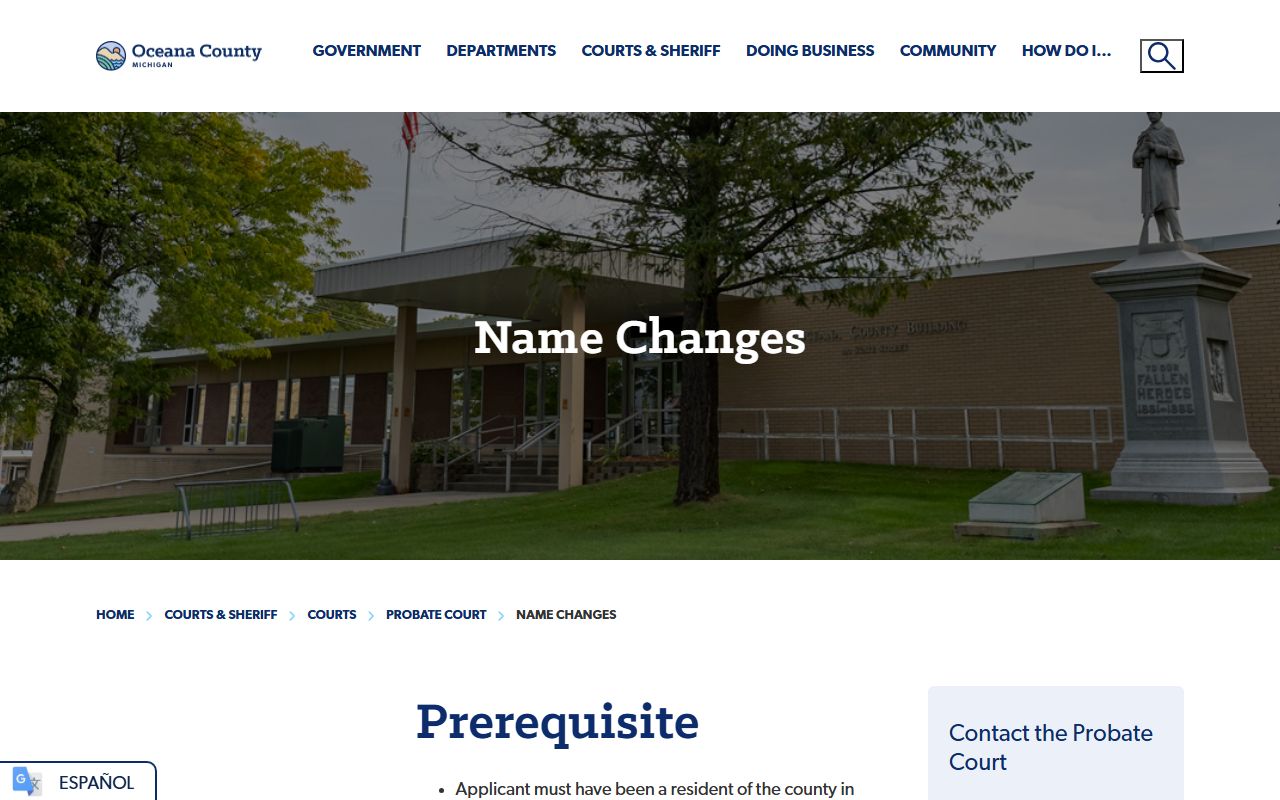
The county's name changes page details the residency rule, fingerprint requirement, and timing. A completed name change may also affect marriage and divorce paperwork handled elsewhere, which is covered on the Oceana County marriage and divorce records page.
Oceana County Probate Filing Fees
Probate fees in Oceana County are set by statute and the state fee schedule rather than by the local office. The common charges are easy to plan for, and the court accepts cash, check, or money order for filings. Online payment is also available through the county's secured payment portal linked from the Probate Court page.
| Item | Amount |
|---|---|
| Decedent estate informal opening filing fee | $175 |
| Certified Letters of Authority | $12 |
| Name-change petition | $175 |
| Name-change background check (paid to State of Michigan) | $44.75 |
| Other probate filings | See Michigan Probate Court Fee Schedule |
The full statewide list of probate charges lives in the Michigan Probate Court Fee Schedule that the county links, so a filer facing an unusual petition can confirm the exact amount before mailing or paying.
What Oceana County Probate Records Show
A probate file grows as a case moves along, and its contents depend on whether the matter is an estate, a guardianship, or a name change. An estate file may include the application or petition, the will, testimony to identify heirs, the death certificate, letters of authority, an inventory of assets, accountings, creditor notices, court orders, and receipts confirming distribution.
Case-level details in the record often list the case number, the court and its probate code, the filing date, the case type, the parties such as the personal representative and heirs or a ward and protected individual, and the register of actions tracking each filing and hearing. Guardianship and conservatorship files add medical or financial material tied to the protected person, which is why those cases carry tighter access rules than a standard estate.
Note: online probate access in Michigan is generally limited to case number, party names, and the register of actions, while full documents and certified copies come from the court itself.
Searching Oceana County Probate Records
Public probate case information starts with MiCOURT Case Search, the Michigan judiciary's statewide trial-court search. Oceana County Probate Court appears there as its own court tenant, so a search points to the local estate, guardianship, conservatorship, and name-change cases the court keeps. Records that are not visible online, older files, or certified copies come from the court office directly by phone or in person.
- Open MiCOURT Case Search and select Oceana County Probate Court as the court to search.
- Search by party name or case number to find the register of actions and basic case details.
- Call the Probate Court at (231) 873-3666 for files, copies, or records that do not appear online.
- Use the SCAO probate forms when preparing a new filing, and the county payment portal for fees.
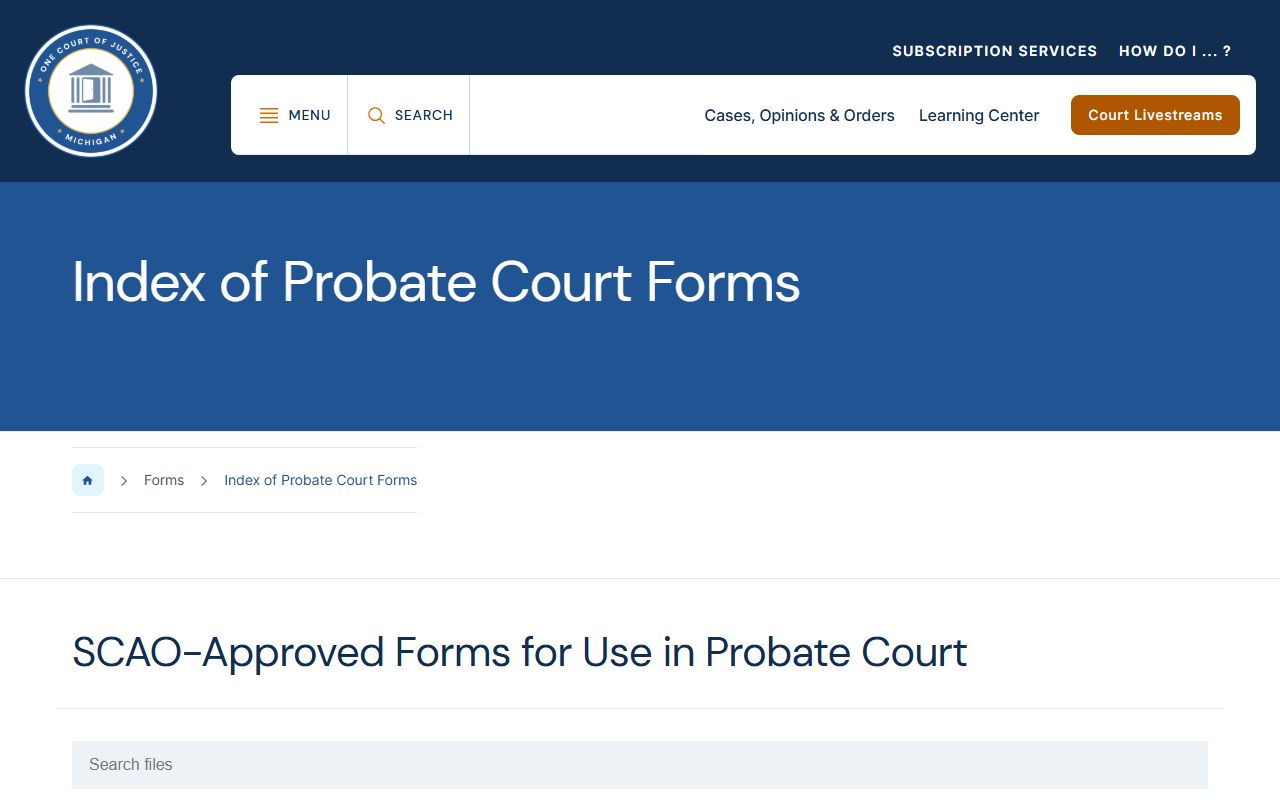
MiCOURT covers case information across the county's courts, and broader searching across circuit and district files is explained on the Oceana County court records page. For a certified death certificate needed to open an estate, the County Clerk's vital-records office is the source rather than the Probate Court.
Restricted Oceana County Probate Records
Not all probate material is open to the public. Mental-illness treatment proceedings fall under the Probate Court and usually contain medical and treatment information that court rule and statute keep confidential. Those files are among the most protected records the court holds.
Guardianship and conservatorship files can also be limited because they carry sensitive medical or financial details about a minor or protected adult. Across every probate file, personal identifiers such as Social Security numbers, financial account numbers, and protected minor information are redacted or excluded from public view, and web access stays narrower than what a person can review in person at the court.