
Criminal Court Records in Oceana County
A criminal court record is the case file a court opens once a prosecutor files a charge. It is the official account of one criminal matter, kept by the court that hears it. The file grows as the case moves, adding each new filing, hearing, order, and payment. When the case ends, the record holds the outcome and any sentence.
In Oceana County the record can sit in one of two trial courts. Misdemeanors and the early steps of a felony belong to the 79th District Court. Serious cases move up to the 51st Circuit Court. The clerk of each court keeps the case file, and the parts open to the public can be viewed online or at the courthouse in Hart.
Most adult criminal cases are public. Charges filed, court dates, pleas, and sentences are part of the open register of actions. Certain files or details are held back by law, and those limits are covered further down.
Which Courts Handle Criminal Cases in Oceana County
Two trial courts share the criminal caseload. The split turns on how serious the charge is. A misdemeanor is a lower offense with a shorter possible jail term. A felony is a serious crime that can carry a state prison term.
The 79th District Court is the entry point for almost every criminal charge. It hears misdemeanor cases from start to finish, and it holds the first steps of a felony. Those early steps are the arraignment and, for felonies, the preliminary examination. At the exam a judge decides whether there is probable cause to send the case up.
The 51st Circuit Court is the general-jurisdiction court. It takes felony cases after bindover, the formal transfer from District Court once probable cause is found. The Circuit Court also handles certain serious misdemeanors. A single felony can leave a trail in both files, one for the District Court steps and one for the Circuit Court case.
Note: A felony that is bound over creates a Circuit Court case file, but the earlier District Court entries stay in that court's record too.
How to Search Oceana County Criminal Court Records
The main tool is MiCOURT Case Search, the Michigan judiciary's statewide public case search. It covers the state's trial courts, and depending on the court, criminal, traffic, civil, family, and probate cases may appear. Three Oceana courts are searchable through it: the 79th District Court, the 51st Circuit Court-Oceana County, and the Oceana County Probate Court.
- Open MiCOURT Case Search and pick the right Oceana court. Use the 51st Circuit Court-Oceana County for felony case files and serious matters, and the 79th District Court for misdemeanors and the early charging steps.
- Search by the defendant's name or by a case number if it is already known.
- Narrow the results by court, case type, and filing date to find the matching criminal case.
- Open the case to read the register of actions, the charges, the plea, and the disposition.
- Request a certified copy from the clerk of the court that holds the file when a court-ready document is needed.
Online access is narrower than a visit to the clerk. Michigan court guidance limits public web-portal access to the case number, party names, and the case history. When the online view is thin or a file predates the electronic system, the Circuit Court offers a written search. Anyone may request a record search on one person for $5 per name, mailed to Oceana County Circuit Court Records, 100 S. State Street, Hart, MI 49420, with a money order and a self-addressed stamped envelope. The court returns file numbers, and files are viewed or copied at the Circuit Court Records Office. Records before 1948 sit at the Oceana Historical Building, 114 S. Dryden Street, Hart. For a wider look at every filing tied to a case, the county's court records search points to the same portals and clerks.
Criminal History and the ICHAT System
A court case file and a criminal-history report are not the same thing. The case file is the court's record of one matter. A criminal-history report is a statewide summary of a person's reportable convictions and open cases. Michigan runs that report through the State Police.
The Michigan State Police criminal-history service hosts ICHAT, the Internet Criminal History Access Tool. It returns public conviction data drawn from arrests reported to the state.
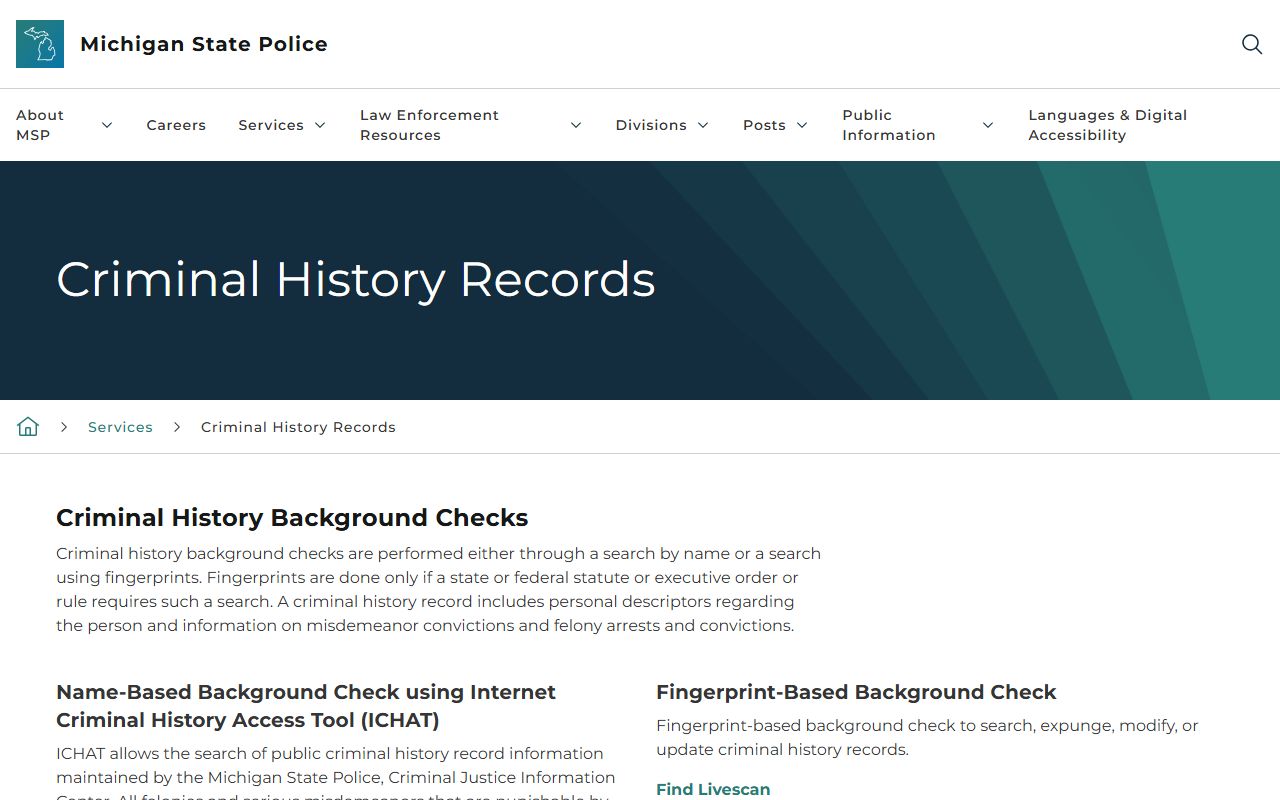
ICHAT is a summary, not a full case file, and it does not list warrants. It reports reportable convictions and open cases, not the day-to-day filings in a court docket. What counts as criminal-history record information is set out in state law.
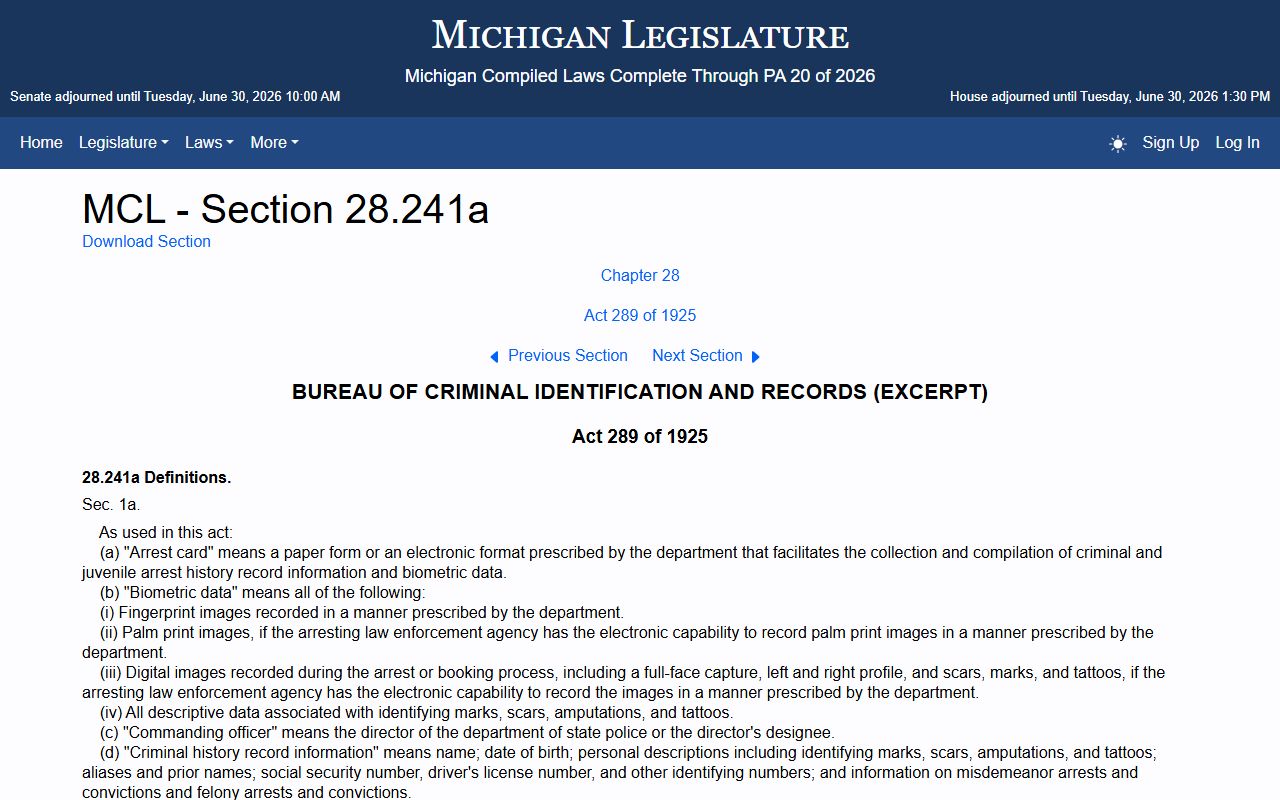
The definition of that data appears in MCL 28.241a, which frames the records the State Police systems collect and share.
Because ICHAT and the court file can differ, a full picture often means checking both the statewide report and the Oceana court record.
Who Files Criminal Charges in Oceana County
Police make arrests, but they do not decide the charge in court. That choice belongs to the county prosecutor. After an investigation or a police referral, the prosecutor decides whether to file, what to file, and in which court.
The Oceana County Prosecuting Attorney's office handles criminal charging for the county. Joseph Bizon serves as Prosecuting Attorney.
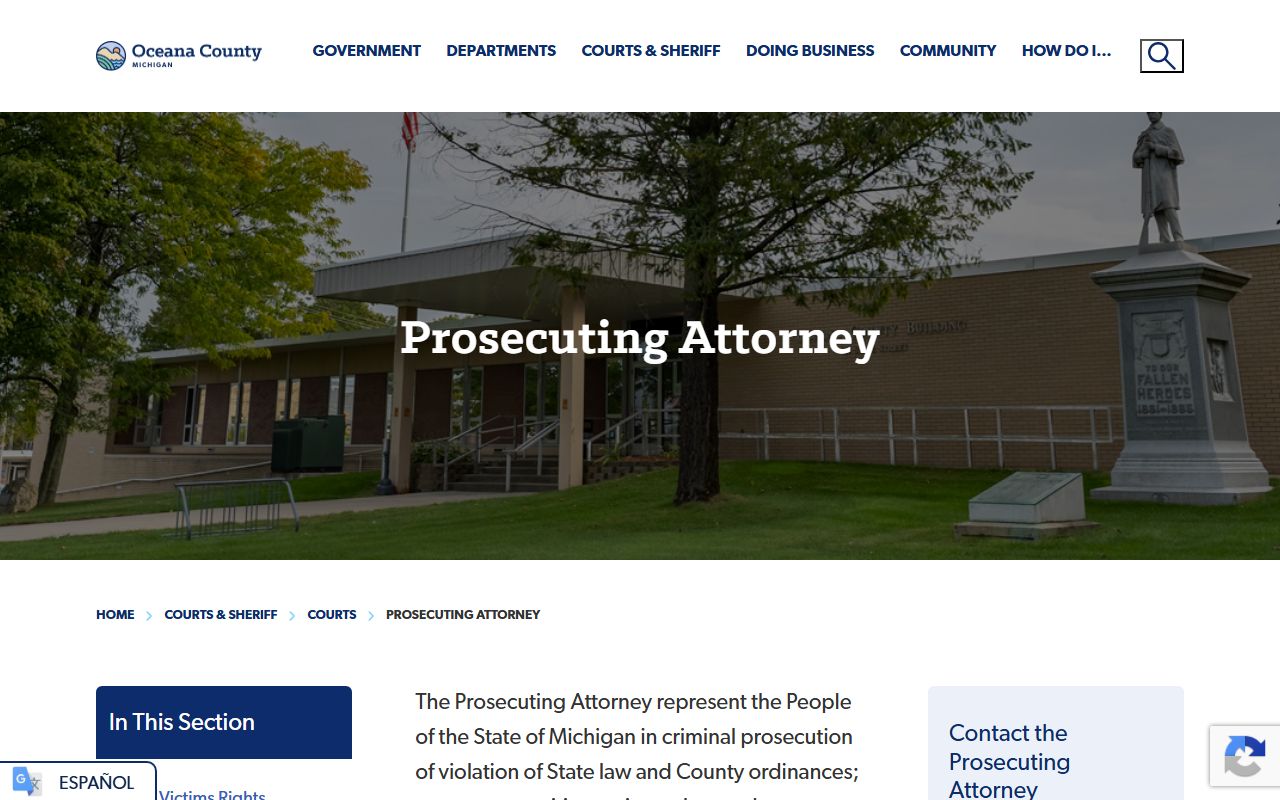
The office decides and files charges after law enforcement refers a case. A District Court matter may begin with an arraignment and, for a felony, a preliminary exam, and the charge moves to Circuit Court once a case is bound over. The office also handles victim-rights duties tied to those cases. A closer look at the charging document itself lives on the arrest records and court charges page.
Oceana County Prosecuting Attorney
100 S. State Street, Suite L-14
Hart, MI 49420
(231) 873-4608
Stages of an Oceana County Criminal Case
A criminal case moves through set steps, and each step adds to the record. Reading the file is easier once the flow is clear. The path below is the general order for a case that runs its full course.
Case flow: Charges Filed › Arraignment › Preliminary Exam or Pretrial › Plea or Trial › Disposition › Sentencing
At the arraignment the defendant hears the charge, learns their rights, enters a first plea, and has bond set. The District Court allows a Zoom arraignment when a request comes in at least 48 hours ahead. For a felony, the preliminary examination follows, where a judge weighs probable cause and decides whether to bind the case over to Circuit Court. Misdemeanors skip the exam and head toward a pretrial instead.
Pretrial hearings and motions come next. The two sides trade information, argue what evidence comes in, and often discuss a plea. Most cases end with a plea rather than a trial. If the case does go to trial, a judge or jury decides guilt. The disposition records that outcome, and sentencing sets the penalty, which can include jail, probation, fines, costs, or restitution.
What an Oceana County Criminal Court Record Shows
A criminal case file is built from many fields. Some name the people involved, some track dates, and others hold the outcome. The table lists the fields that most often appear in an Oceana criminal record.
| Field | What It Shows |
|---|---|
| Case Number | The court's file number for the matter, tied to the court and its case-management system. |
| Court | Whether the case sits in the 79th District Court or the 51st Circuit Court-Oceana County. |
| Parties | The prosecutor for the state and the named defendant, plus counsel of record. |
| Charges | The offense or offenses filed, with any amended, reduced, or added counts. |
| Filing Date | The date the complaint, warrant, or information was filed. |
| Register of Actions | The running list of filings, motions, hearings, orders, and payments. |
| Plea | The defendant's answer of guilty, not guilty, or no contest. |
| Disposition | The result for each charge, such as convicted, dismissed, or acquitted. |
| Sentence | The penalty imposed, including jail, probation, fines, costs, or restitution. |
Note: Public web access may show only the case number, party names, and case history, so full documents often require the clerk of the court that holds the file.
Reading Dispositions and Sentences
The disposition is the heart of a criminal record. It states how each charge ended. One case can hold several dispositions when it carries several charges, so a person can be convicted of one count and cleared of another.
A few terms come up again and again when reading the outcome of an Oceana criminal case.
- Disposition
- The outcome of a case or a single charge.
- Plea
- The defendant's formal answer of guilty, not guilty, or no contest.
- Sentence
- The punishment or court order entered after a conviction.
- Probation
- A supervised sentence served in the community rather than in custody.
- Restitution
- Money the court orders paid to a victim for a loss.
- Bindover
- The transfer of a felony from District Court to Circuit Court after probable cause is found.
Charges vs. Convictions in Oceana County Records
A charge is an accusation. A conviction is a proven result. A criminal court record can list charges that were later dropped, dismissed, or ended in a not-guilty verdict, so a filed charge should never be read as proof of guilt.
The two sit at different points in a case and meet different legal tests.
| Charge | Conviction | |
|---|---|---|
| Stage | Accusation at the start of a case | Verdict or plea at the end |
| Who Acts | The prosecutor files it | A judge or jury enters it |
| Legal Test | Probable cause | Proof beyond a reasonable doubt |
| Meaning | The state believes an offense occurred | Guilt is legally established |
| Public Record | Yes, unless restricted | Yes, unless set aside |
Public Access to Oceana County Criminal Court Records
Adult criminal case files in Michigan are public by default. The rules that define court records and set the terms of access come from the Michigan Court Rules, not mainly from the Freedom of Information Act, which fits county and sheriff files better than court case files.
Key Rules and Statutes:
Michigan Court Rule 8.119 - Governs trial-court records and sets public access to those records.
Michigan Court Rule 1.109 - Defines court records as information created by or filed with a court under the rules.
MCL 15.231 - The Michigan Freedom of Information Act, used for county and sheriff records rather than court case files.
The county also notes a limit on the clerks themselves. Under MCL 600.916(1), court clerks cannot give legal advice or prepare legal documents, so they can point to forms and files but not counsel a party.
Sealed vs. Set-Aside Records in Oceana County
Michigan uses the term set aside for clearing an eligible adult conviction. A set-aside changes public access to the record, while a sealed record is hidden from the public but not erased. Neither one makes every agency forget the case, since courts and law enforcement may still see certain data.
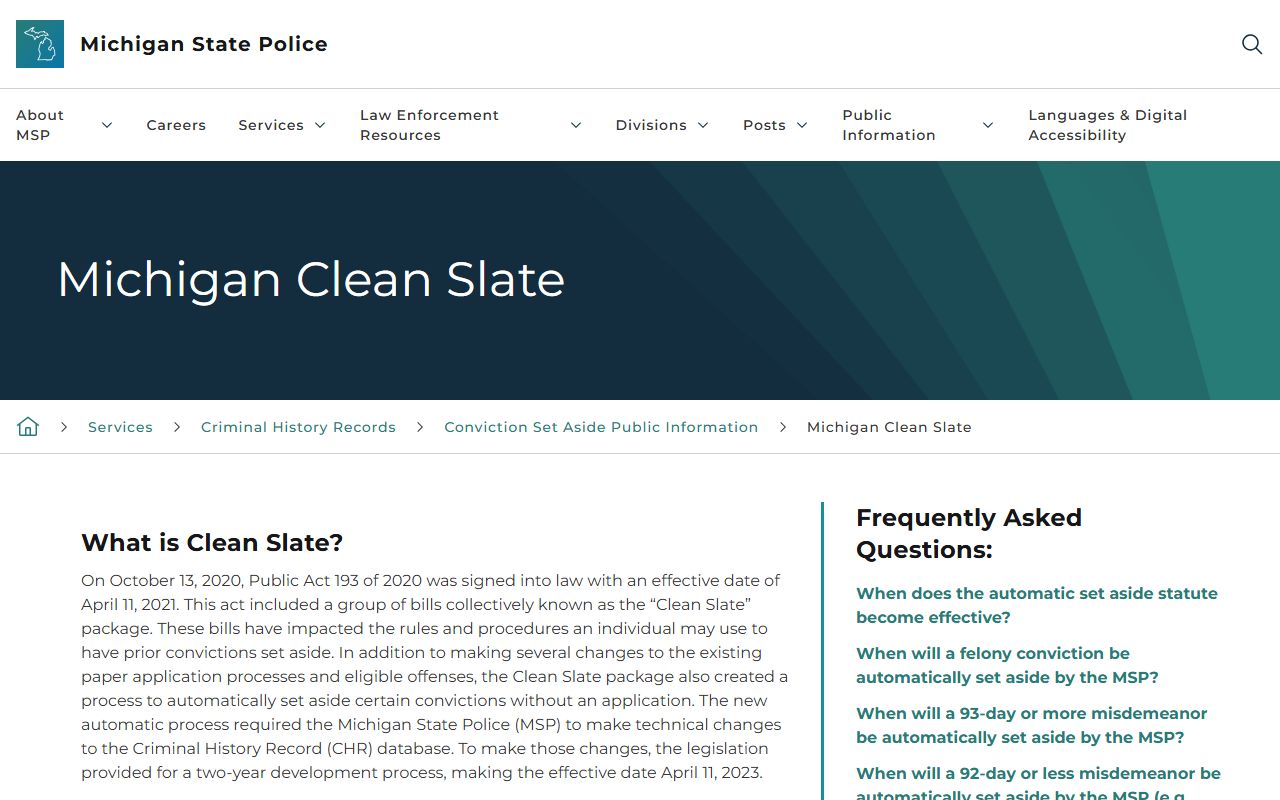
The state's Clean Slate program explains how some convictions clear automatically and how others clear by application.
The table below sets the two apart at a glance.
| Sealed | Set Aside | |
|---|---|---|
| Public Access | Hidden from public view | Removed from public criminal-history access |
| Law Enforcement | Limited access allowed | Courts and authorized agencies may still see it |
| How It Happens | By court order in specific cases | Automatically or by application under Clean Slate |
| Michigan Term | Sealed by rule or order | Set aside under statute |
The main path to ask a court to clear a conviction is set out in MCL 780.621, which lists the convictions that may be set aside.
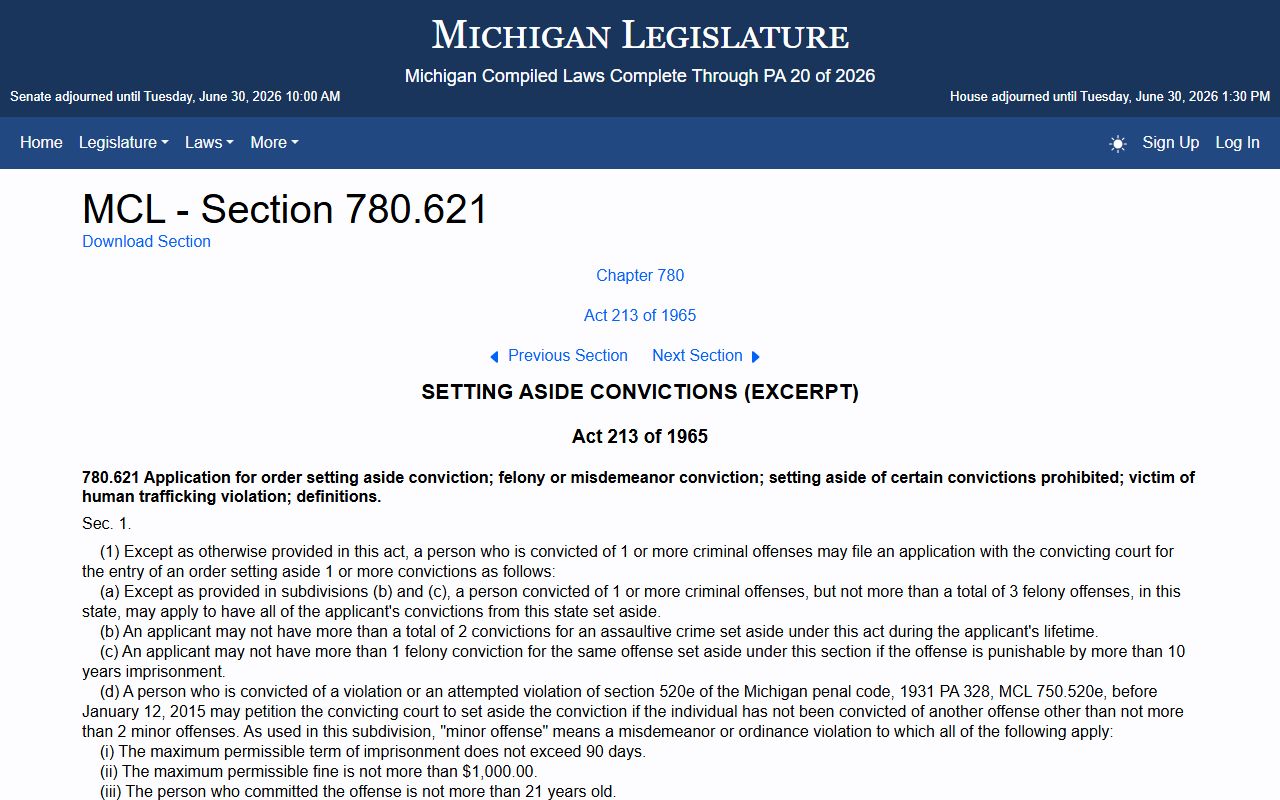
Traffic offenses follow their own rule, and a set-aside there does not by itself clear the state driving record.
Setting Aside an Oceana County Conviction
A set-aside application goes back to the court that entered the conviction. Felony matters route to the 51st Circuit Court, and misdemeanor or traffic matters route to the 79th District Court. The steps below outline the general path in Michigan.
- Identify the court of conviction and pull the case number and judgment details from the file.
- Check eligibility under the set-aside statute and the Clean Slate rules to see if the conviction may clear automatically or needs an application.
- Confirm the waiting period has passed for the conviction type before filing.
- File the application with the convicting court, since Circuit Court handles felonies and District Court handles misdemeanors and traffic.
- Keep the signed court order, and use it if a set-aside record still appears in ICHAT or a court index.
Some traffic convictions have special treatment under MCL 780.621c, which notes that setting aside a traffic offense need not remove it from Secretary of State driving records.
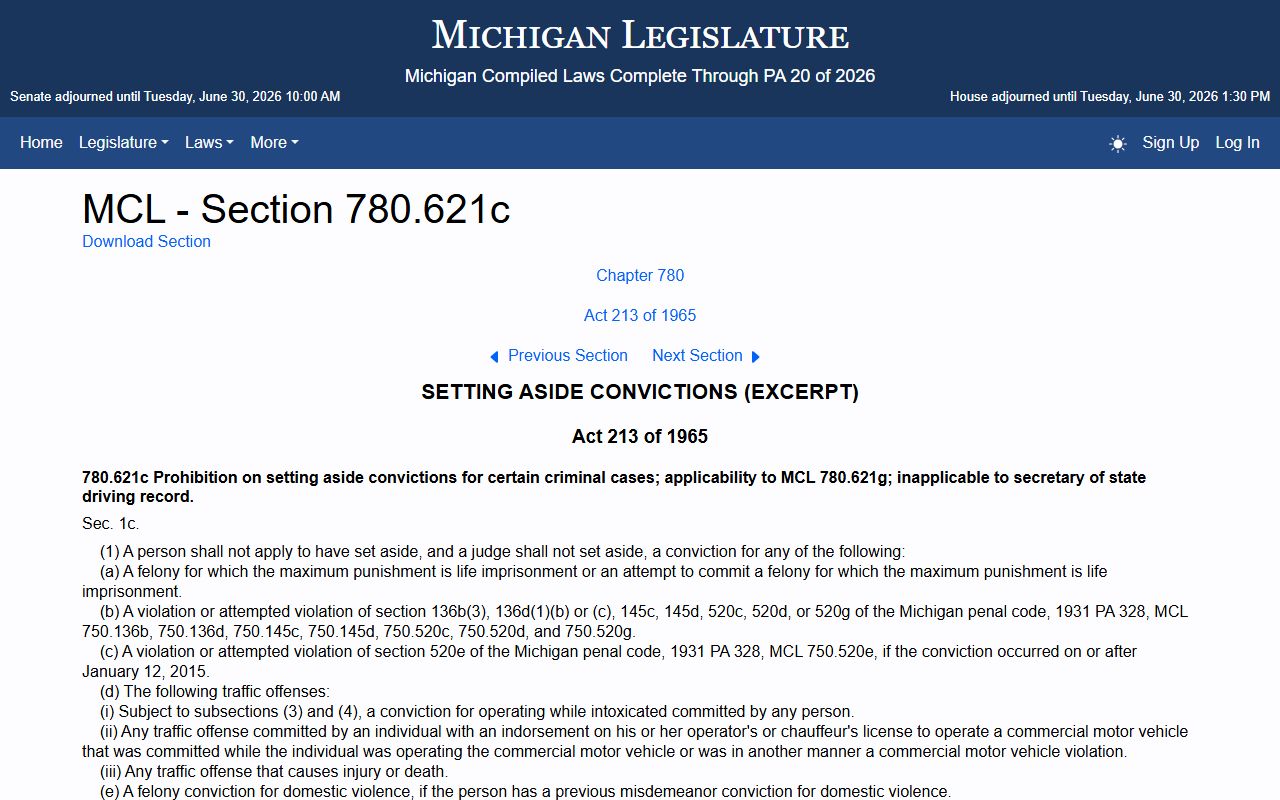
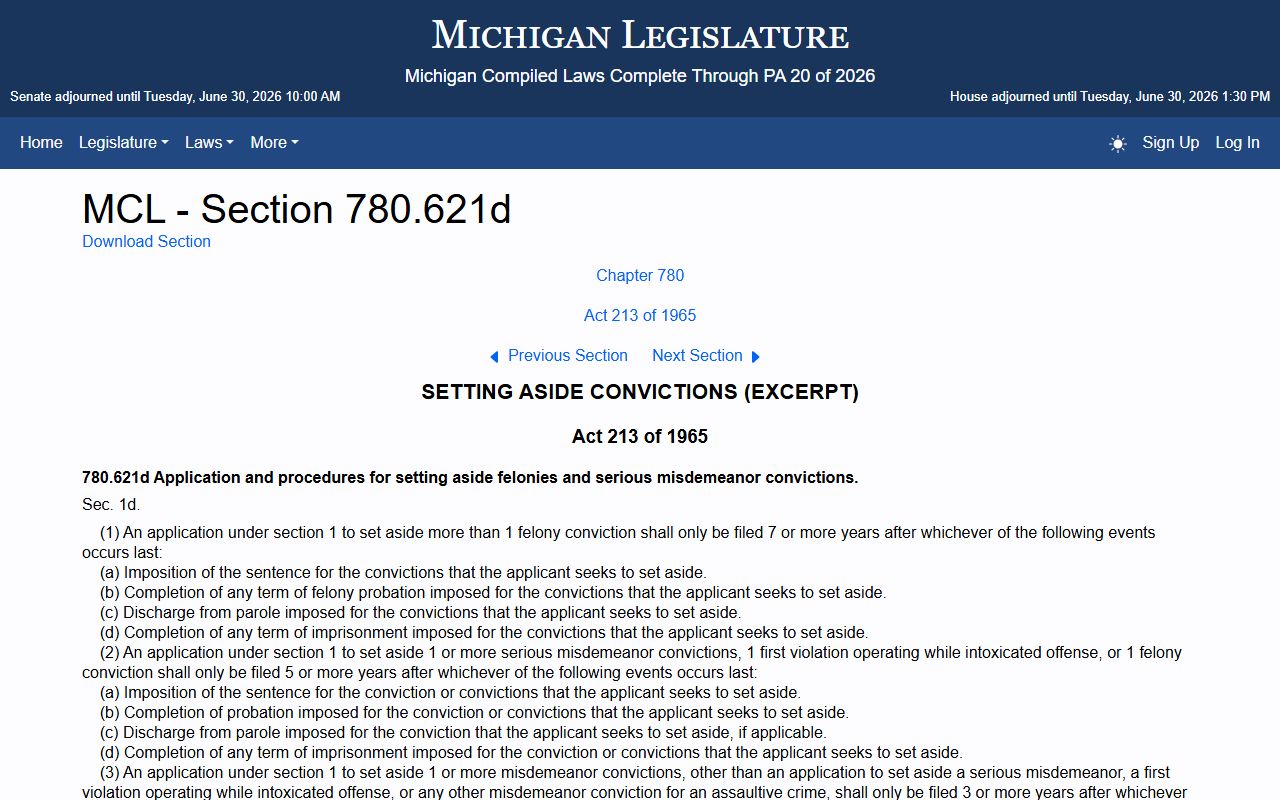
Waiting periods turn on the conviction category and on events like sentence completion or discharge.
Those timelines are laid out in MCL 780.621d, which ties the wait to the type of conviction and the release or discharge date.
Note: A court clerk can provide the forms and filing steps for a set-aside, but by law cannot give legal advice on whether a conviction qualifies.
Restricted Criminal Court Records in Oceana County
Not every criminal-related file is open. Some records are closed by law to protect youth, patients, or sensitive family matters. These limits apply even when the case exists and even when part of it once appeared online.
Juvenile cases carry the strongest shield. The Oceana Juvenile Court sits within the Family Division of the Circuit Court and handles youth under 18 charged with crimes or status offenses.
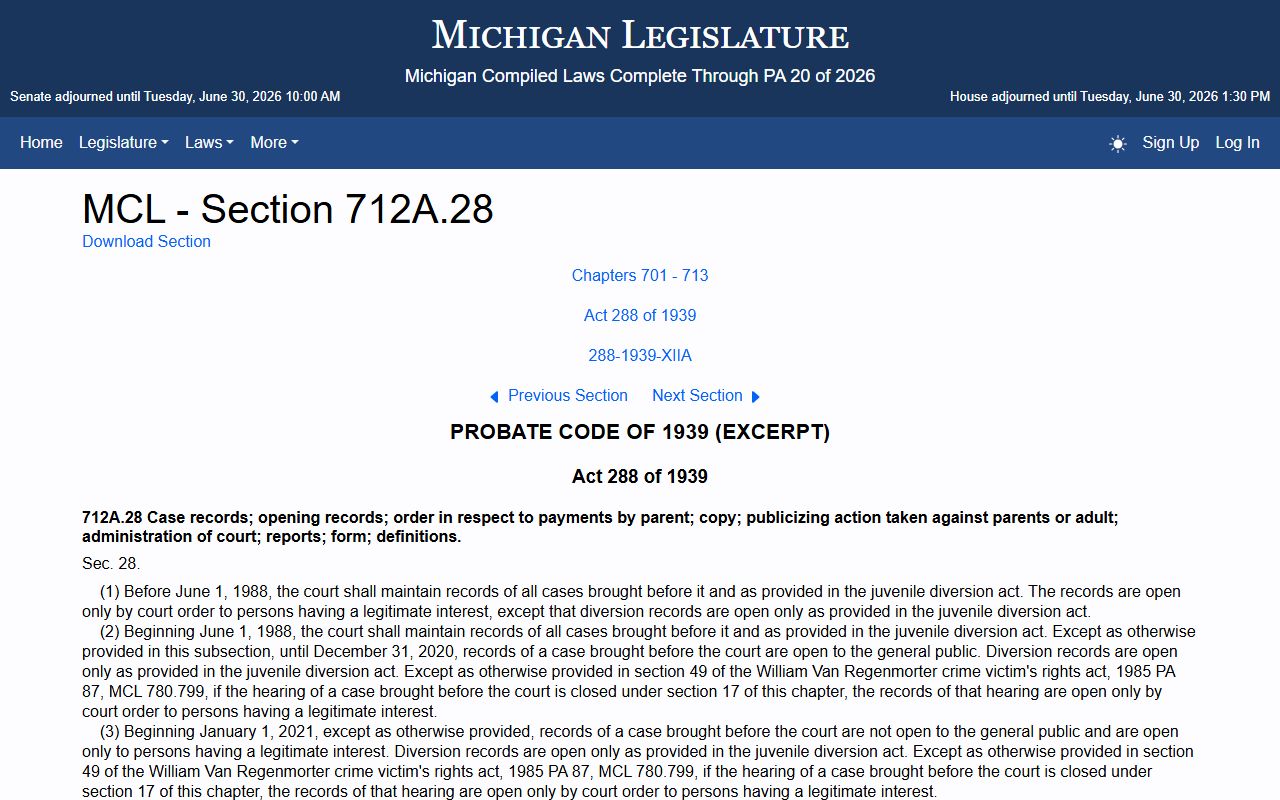
Under MCL 712A.28, juvenile case records are not open to the general public except for people with a legitimate interest or by court order. Mental-health treatment proceedings run through the Probate Court and often hold medical detail, so they are limited too. Adoption files, handled in the Family Division, are confidential and are not ordinary public family records.
Public-facing records also redact personal identifiers. Social Security numbers, financial account numbers, protected addresses, and minor information are kept out of the public view, and set-aside cases drop out of public criminal-history access.